Table of Contents
- Quick Comparison
- What is a Composite Sink?
- Is a Composite Sink Better Than Stainless Steel?
- Is Stainless Steel Better Than Composite?
- What is the Best Kitchen Sink Material?
- Composite Sink Pros
- Composite Sink Considerations
- Stainless Steel Sink Pros
- Stainless Steel Sink Considerations
- Granite Composite vs. Quartz Composite: What’s the Difference?
- Composite vs. Stainless Steel: Durability and Heat
- Composite vs. Stainless Steel: Noise
- Composite vs. Stainless Steel: Cleaning and Maintenance
- What Gauge Should a Stainless Steel Sink Be?
- Best Uses
- What Should You Compare in Person?
- Should You Choose Composite or Stainless Steel?
- Visit the Buffalo Grove Showroom
- Frequently Asked Questions
When comparing composite vs. stainless steel sinks, neither material is better across the board. Composite brings a stone-like finish, color choices, and a quieter sink. Stainless steel brings a classic look, lighter weight, and no risk of chipping.
The right fit depends on your countertop, how you cook, and how much upkeep you’re comfortable with. The team at Banner Plumbing’s Buffalo Grove showroom helps homeowners weigh these tradeoffs during a kitchen remodel, with guidance on material, color, and size.
Planning a kitchen remodel? Talk through sink materials with the Buffalo Grove showroom team before you choose.
Quick Comparison
| Category | Composite | Stainless Steel |
|---|---|---|
| Material | Crushed granite or quartz bound with resin | Sheet steel, commonly 16 or 18 gauge for home kitchens |
| Look | Matte, stone-like finish in a range of colors | Metallic finish that pairs with stainless appliances |
| Heat Resistance | Many are rated to about 535°F | Handles hot pots and boiling water |
| Noise | Dense material naturally dampens sound | Can be louder, especially in thinner gauges |
| Everyday Wear | Resists scratches and stains; dark colors show mineral buildup | Won’t chip or crack; shows scratches and water spots and can dent in thinner gauges |
| Weight | Heavier | Lighter |
What is a Composite Sink?
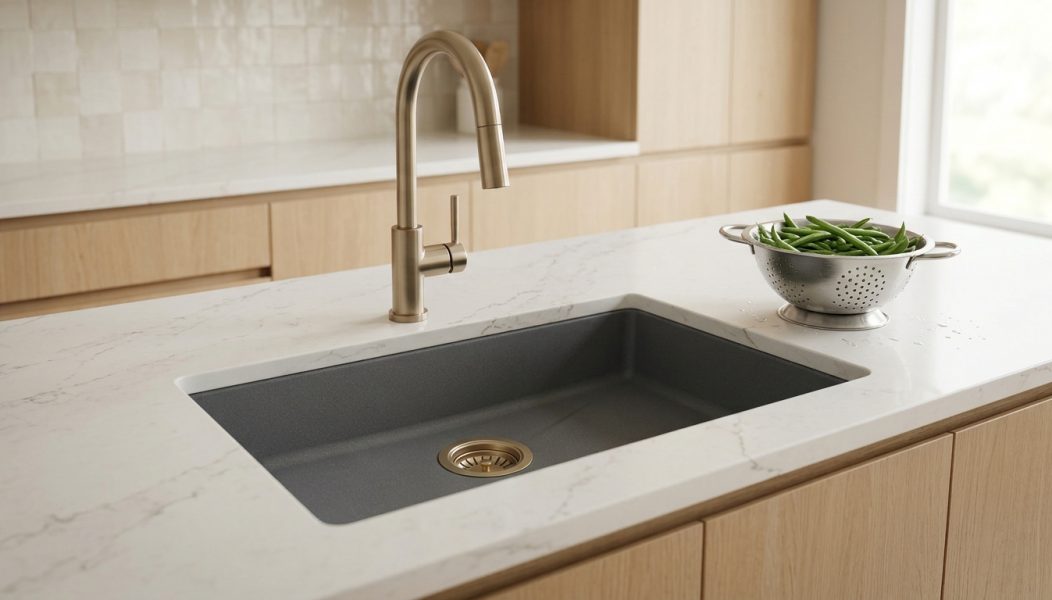
A composite sink is made from crushed natural stone, usually granite or quartz, mixed with a resin binder and molded into shape. Many composite sinks contain about 80 percent stone, which gives them a solid, stone-like feel. In many composite sinks, the color runs all the way through the material, which helps it resist fading.
Is a Composite Sink Better Than Stainless Steel?
Not for every kitchen, but composite is the stronger fit if you want a sink that coordinates with your countertop color or a quieter sink in an open-concept space. It also resists scratches and stains well, which helps it keep a consistent look over time.
Is Stainless Steel Better Than Composite?
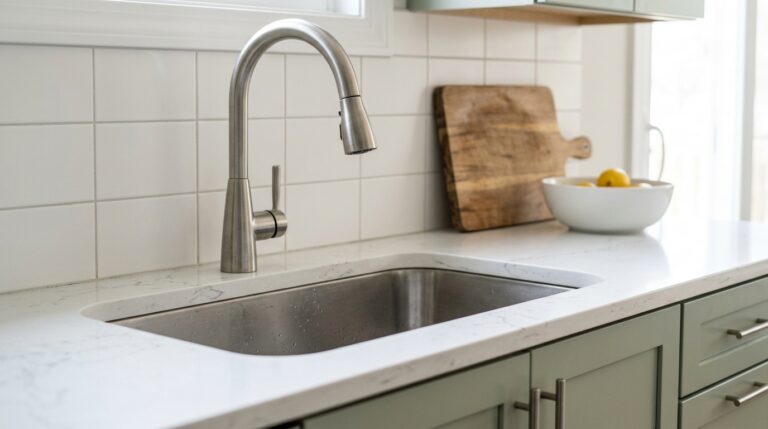
Stainless steel is the stronger fit if you want a sink that matches your appliances, won’t chip or crack, and is lighter to install. It also comes in a broad range of sizes, bowl configurations, and gauges.
What is the Best Kitchen Sink Material?
For most kitchen remodels, the best kitchen sink material is either composite or stainless steel, depending on your priorities. Stainless steel is the best fit for impact resistance and a classic look. Composite is the best fit for a stone-like finish and quieter use. Fireclay and cast iron are also worth a look for farmhouse-style kitchens.
Composite Sink Pros
- Stone-like look: Matte finishes in colors from white to black that can coordinate with your countertop
- Heat resistance: Many composite sinks are rated to withstand about 535°F
- Scratch and stain resistance: A non-porous surface holds up to everyday kitchen wear
- Quieter use: The dense material naturally dampens the sound of dishes and running water
- Fade resistance: In many composite sinks, color runs through the material, so it resists fading in sunlight
Composite Sink Considerations
Dark composite sinks tend to show white mineral and limescale buildup, so they may need regular deep cleaning, especially with hard water. Metal pots and utensils can leave dark marks on lighter colors, though these typically clean off easily.
Composite sinks are also heavier than stainless steel, which is worth discussing with your installer for undermount installations.
Stainless Steel Sink Pros
- Classic look: Pairs with stainless appliances and fits nearly any kitchen style
- Won’t chip or crack: Handles dropped dishes and heavy pots without chipping
- Heat tolerance: Handles hot pots and boiling water
- Lighter weight: Easier to handle and support during installation
- Broad selection: A wide range of sizes, bowl configurations, gauges, and price points
Stainless Steel Sink Considerations
Stainless steel shows scratches and water spots, though a brushed or satin finish helps hide everyday wear. Thinner gauges can dent and tend to be louder, which is why many stainless sinks add sound-dampening pads or undercoating.
Granite Composite vs. Quartz Composite: What’s the Difference?
Both are composite sinks made from crushed stone and resin, and they perform similarly in daily use. Granite composite uses crushed granite, while quartz composite uses crushed quartz. The two can differ in texture, color range, and finish depending on the manufacturer.
If you’re comparing specific composite brands, see how Blanco and Franke approach their composite materials.
How Does a Quartz Composite Sink Compare to Stainless Steel?
The comparison mirrors granite composite vs. stainless steel. A quartz composite sink gives you a stone-like surface and dampens the sound of dishes and running water, and some quartz composite lines are rated for heat up to about 535°F. Stainless steel is lighter, won’t chip, and is the easier match for a kitchen full of stainless appliances.
Composite vs. Stainless Steel: Durability and Heat
Both materials are built for daily kitchen use, but they handle wear differently:
- Composite: Resists scratches and stains well, and many composite sinks are rated to withstand temperatures of about 535°F
- Stainless steel: Won’t chip or crack, but can dent in thinner gauges and shows surface scratches over time
A brushed stainless finish helps fine scratches blend in over time.
Composite vs. Stainless Steel: Noise
Composite sinks are naturally quieter because the dense, stone-based material absorbs sound. Stainless steel can be louder, especially in thinner gauges. Thicker steel and sound-dampening pads help reduce noise.
If your kitchen opens to a living or dining area, noise is worth weighing. The disposal adds to sink noise, too, so comparing disposal sizes and sound insulation is worth doing if a quiet kitchen matters.
Composite vs. Stainless Steel: Cleaning and Maintenance
Both materials clean up easily with mild dish soap and a soft sponge for daily care. The differences show up over time:
- Composite: Periodic deep cleaning removes limescale buildup, which is most visible on darker colors
- Stainless steel: Wiping the sink dry helps prevent water spots, and cleaning with the grain keeps a brushed finish looking even
Care recommendations vary by brand, so follow the manufacturer’s guidance for cleaning products.
What Gauge Should a Stainless Steel Sink Be?
For home kitchens, 16 and 18 gauge are the most common recommendations. Gauge measures thickness, and lower numbers mean thicker steel, so 16 gauge is thicker than 18 gauge.
Thicker steel tends to resist dents better and stays quieter, while 18 gauge can be a practical option for everyday use.
Best Uses
| Priority | Consider |
|---|---|
| Stone-like look or color matched to your countertop | Composite |
| Quieter sink in an open-concept kitchen | Composite |
| Classic look that matches stainless appliances | Stainless steel |
| No risk of chipping from heavy pots | Stainless steel |
| Lighter sink for easier installation | Stainless steel |
| Heat resistance for hot pans | Both materials |
What Should You Compare in Person?
- How each material looks next to your countertop and cabinet samples
- Color options for composite and finish options for stainless steel
- Bowl depth, size, and configuration for how you cook
- How each sink pairs with your faucet finish
If you’re also choosing countertops, comparing quartz and granite countertops can help you plan the sink and counter together.
Should You Choose Composite or Stainless Steel?
Choose composite if a stone-like finish, a color matched to your countertop, and a quieter sink matter most, and you don’t mind occasional deep cleaning.
Choose stainless steel if you want a classic look, a lighter sink, no risk of chipping, and a broad range of sizes and price points.
To see where the sink fits in your overall plan, estimating your kitchen remodel cost is a useful next step.
Visit the Buffalo Grove Showroom
Sink material is easier to choose when you can see it next to the rest of your kitchen. As a kitchen remodel showroom, Banner’s Buffalo Grove location helps homeowners compare sinks alongside faucets, cabinets, and finishes so the whole space comes together.
Showroom staff can help you narrow sink size, configuration, and material based on your layout and how you cook. Browse sink options in the catalog to build a shortlist before you visit.
Map your trip to the Buffalo Grove showroom or ask the Banner Plumbing team a question before you stop in.
Frequently Asked Questions
- Can you put a hot pan in a composite sink?
Many composite sinks are rated to withstand temperatures of about 535°F, so hot pans and boiling water are generally fine. Check the manufacturer’s heat rating for your specific sink.
- What are the pros and cons of a granite composite sink?
Granite composite sinks resist scratches, stains, and heat, come in many colors, and are quieter than stainless steel. On the downside, dark colors show mineral buildup, and the sinks are heavier than stainless steel.
- Do composite sinks stain?
Composite sinks are non-porous and resist stains. Most surface discoloration comes from limescale or mineral buildup, which regular cleaning removes.
- Which sink material is quietest?
Composite sinks are generally quieter than stainless steel because the dense, stone-based material absorbs sound. Among stainless sinks, thicker 16-gauge models with sound-dampening pads are quieter than thinner gauges.
- Where can I compare kitchen sink materials in Chicagoland?
Banner Plumbing’s Buffalo Grove showroom helps homeowners compare sink materials, sizes, and configurations alongside faucets and finishes for their kitchen remodel.