Table of Contents
- What is a Heated Bathroom Floor?
- Is a Heated Bathroom Floor Worth It?
- Electric vs. Hydronic: Which is Better for a Bathroom?
- What Affects Heated Bathroom Floor Cost?
- How Much Does a Heated Floor Cost to Run?
- What Flooring Works Best With Radiant Heat?
- Can You Add a Heated Floor Without Replacing Tile?
- How Do Fixture Choices Affect a Heated Floor?
- How is a Heated Bathroom Floor Installed?
- Should You Add a Heated Floor to Your Bathroom Remodel?
- Visit the Buffalo Grove Showroom
- Frequently Asked Questions
A heated bathroom floor is worth it for most homeowners who are already replacing their bathroom floor. It adds warmth underfoot every day, especially through a Chicagoland winter. It’s rarely worth it as a standalone project, since the existing floor has to come up for installation.
Most bathrooms use electric radiant heat, which installs in a thin layer under tile. Banner Plumbing’s Buffalo Grove showroom helps homeowners plan the vanity, toilet, and shower layout that determines where a heated floor can go.
Planning a bathroom remodel? Talk through fixtures and layout with the Buffalo Grove showroom team before your floor plan is set.
What is a Heated Bathroom Floor?
A heated bathroom floor uses radiant heat installed beneath the flooring to warm the surface you walk on. In most bathrooms, radiant floor heating means electric cables or mats set in thinset mortar under tile, controlled by a dedicated thermostat. Many electric mats are about 1/8 inch thick, so they add minimal height to the finished floor.
Is a Heated Bathroom Floor Worth It?
For most bathroom remodels that include new flooring, yes. A heated floor makes the most sense when:
- You’re already replacing the floor: Installation happens with new tile, so adding heat during a remodel avoids tearing out a finished floor later
- The bathroom gets daily use: A primary bathroom used every morning gets more value than a rarely used guest bath
- Comfort is the goal: Heated floors take the chill off tile and add warmth underfoot
It’s usually not worth it if you’re keeping your current floor, or if you expect the heated floor to replace the room’s main heat source.
Electric vs. Hydronic: Which is Better for a Bathroom?
Electric radiant heat is the better fit for most bathroom remodels. Electric systems are easier to install and are popular for single-room projects and retrofits. Hydronic systems circulate hot water through tubing and are more often designed into whole-home heating from the start.
| Category | Electric Radiant | Hydronic Radiant |
|---|---|---|
| How It Works | Heating cables or mats under the floor | Hot water circulated through tubing under the floor |
| Best Fit | Single rooms, bathroom remodels, retrofits | Whole-home heating, often in new construction |
| Installation | Simpler; set in thinset under tile | More complex; requires a boiler connection |
| Upfront Cost | Typically lower | Typically higher |
| Operating Cost | Typically higher than hydronic, but limited to one room | Typically lower |
What Affects Heated Bathroom Floor Cost?
Heated bathroom floor cost depends more on your project than on the heating product alone. The biggest factors include:
- Heated area: Cost scales with the square footage you heat, which is usually the open floor area rather than the full room
- System type: Electric mats and cables generally cost less to install than hydronic systems in a single bathroom
- New flooring: The heating system goes in with new tile or stone, so flooring materials and tile labor are part of the budget
- Electrical work: Heated floors require ground-fault (GFCI) protection, and many installations need a dedicated circuit run by a licensed electrician
- Thermostat: Programmable and Wi-Fi thermostats cost more than basic models but help control operating costs
- Subfloor prep: Leveling, backer board, or insulation can add to the total depending on your existing floor
Because these factors vary so much from bathroom to bathroom, an installer’s quote based on your layout is the most accurate way to price a heated floor.
How Much Does a Heated Floor Cost to Run?
Operating cost depends on the heated area, how many hours the system runs, your home’s insulation, and your electricity rates. A programmable thermostat helps keep costs down by warming the floor only when you’ll use it, such as before your morning routine.
According to the U.S. Department of Energy, electric radiant floors are usually cost-effective as a primary heat source only under specific conditions. That’s why most bathroom heated floors are used as supplemental comfort heat.
What Flooring Works Best With Radiant Heat?
Tile and stone are the most common choices for a heated tile floor in a bathroom, and electric radiant heat works best under them. Both set directly over the heating mat in thinset mortar. Some electric systems are also rated for laminate, vinyl, or engineered wood, so check the manufacturer’s approved flooring list before choosing a material.
Can You Add a Heated Floor Without Replacing Tile?
No. Electric floor heating is installed beneath the flooring, so adding it means removing the existing floor and installing new tile or stone on top. If you want a warmer bathroom without a full floor replacement, these bathroom refresh ideas cover updates that leave tile in place.
How Do Fixture Choices Affect a Heated Floor?
Fixture placement determines where the heat can go. Manufacturers specify that heating mats should not be installed under permanent fixtures like vanities, tubs, and toilets, so the heated zone covers the open floor between them.
That makes fixture decisions part of heated floor planning:
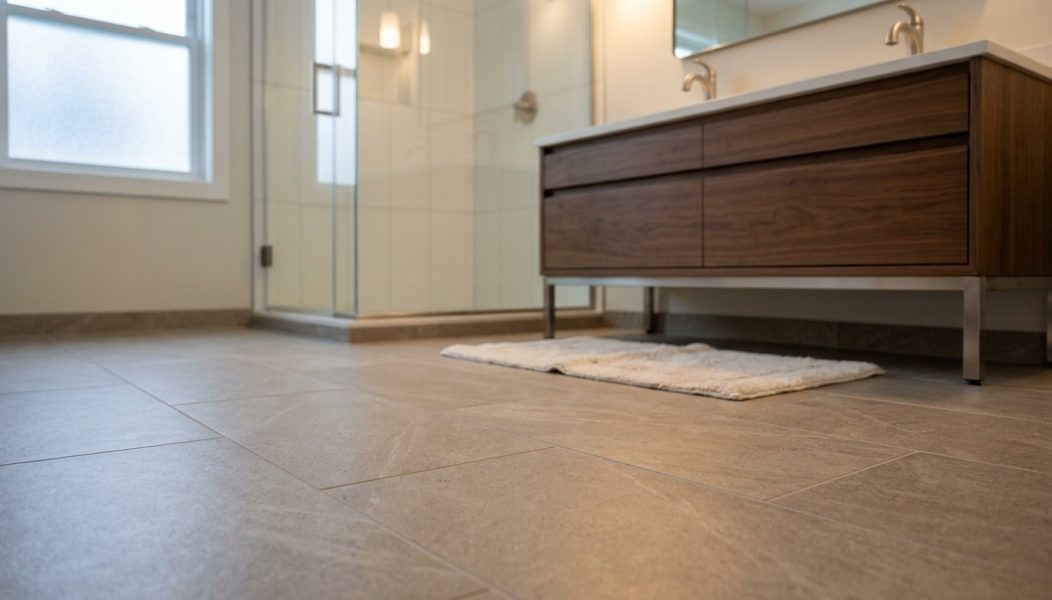
- Vanity style: Some manufacturers allow heating under a vanity raised on legs with enough clearance, while a vanity that sits on the floor blocks that area
- Toilet and tub placement: Heated zones are planned around these fixtures, so the layout needs to be set before the mat is designed
- Walkways: The areas you actually stand on, like in front of the vanity and outside the shower, are where heat matters most
If you’re still choosing fixtures, this guide to choosing bathroom fixtures is a helpful starting point. You can also browse vanity styles to compare footprints and leg heights.
How is a Heated Bathroom Floor Installed?
Electric floor heating is installed after demolition and before the new floor goes down. A typical installation follows these steps:
- Layout planning: The heated zone is mapped around fixtures, and a mat or cable is sized to fit
- Electrical rough-in: An electrician runs a protected circuit to the thermostat location
- Mat and sensor placement: The heating mat is set in thinset over the prepared subfloor, along with a floor temperature sensor
- Testing: The system is tested before tile goes down, since the mat can’t be adjusted afterward
- Tile and thermostat: New tile is set over the mat, and the thermostat is connected and programmed
Many electric systems carry long manufacturer warranties, so ask your installer which warranty applies and what installation steps it requires.
Should You Add a Heated Floor to Your Bathroom Remodel?
Add a heated floor if you’re replacing your bathroom floor anyway, the bathroom gets daily use, and you want warmth underfoot through cold months.
Skip it if you’re keeping your current floor, the bathroom is rarely used, or you need the room’s primary heat source, which is a question for an HVAC professional.
If warmth is a priority, heated toilet seat options are another comfort upgrade worth considering during the same remodel.
Visit the Buffalo Grove Showroom
A heated floor works best when it’s planned around the fixtures you choose. Banner’s Buffalo Grove bathroom remodeling showroom helps homeowners compare vanities, toilets, and shower options, and talk through layouts that leave room for features like floor heating.
If you’re planning bathroom remodeling in Buffalo Grove or a nearby suburb, the showroom team can help you finalize fixture choices before your floor plan is set.
Get directions to the Buffalo Grove showroom or reach out to Banner Plumbing with questions before your visit.
Frequently Asked Questions
- Can a heated floor be the only heat source in a bathroom?
Usually not. Electric heated floors are most often used as supplemental comfort heat. Whether one can heat a bathroom on its own depends on room size, insulation, and climate, so an HVAC professional can confirm for your space.
- Do heated bathroom floors use a lot of electricity?
It depends on the heated area, how long the system runs, and your electricity rates. A programmable thermostat helps limit use by warming the floor only when you need it.
- Can you install a heated floor under a vanity or toilet?
No. Manufacturers specify that heating mats should not be installed under permanent fixtures like vanities, tubs, and toilets. Some allow installation under a vanity raised on legs with enough clearance.
- Can you put a heated floor in a shower?
It depends on the system. Some electric mats are listed for wet locations when installed to the manufacturer’s instructions, while others prohibit wet-area installation. Check the product’s specifications before planning heat in a shower.
- Where can I get help planning a bathroom remodel in Buffalo Grove?
Banner Plumbing’s Buffalo Grove showroom helps homeowners choose vanities, toilets, showers, and fixtures, and plan layouts that work with features like heated floors.