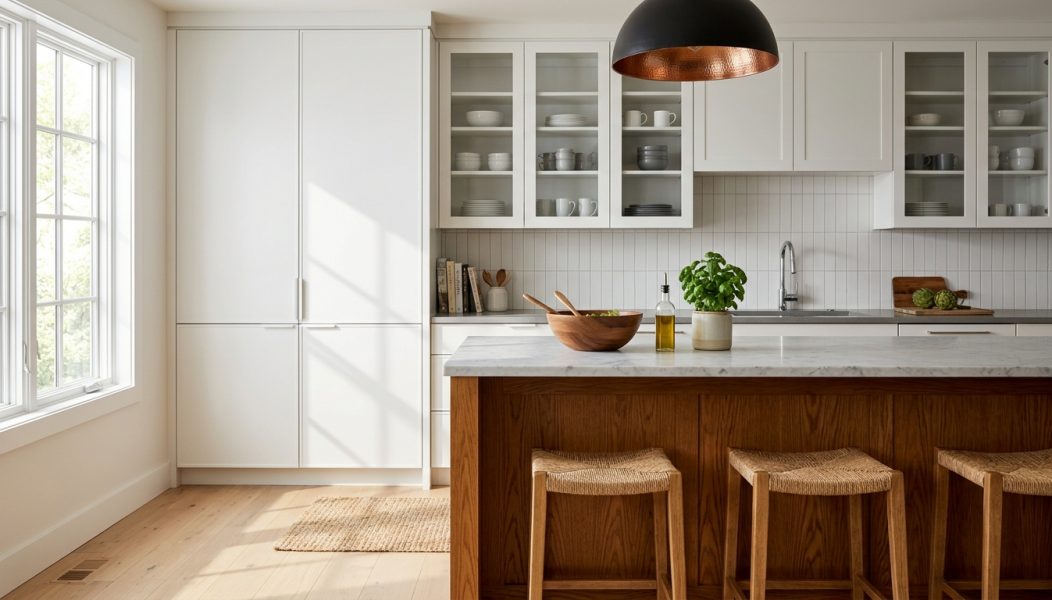
Table of Contents
- Key Takeaways
- What is a Painted Cabinet Finish?
- What is a Stained Cabinet Finish?
- How Do Painted and Stained Cabinets Compare?
- What Materials Work Best With Each Finish?
- How Do Painted and Stained Cabinets Compare in Everyday Maintenance?
- What’s the Difference Between “Paint Grade” and “Stain Grade” Cabinets?
- Which Finish is Right for Your Kitchen or Bath?
- Frequently Asked Questions
The difference between painted and stained cabinet finishes comes down to what the finish does to the wood underneath. Paint fully covers the wood grain with solid color, while stain lets the natural wood grain show through with added color and depth. Get directions to the Buffalo Grove showroom to see painted and stained samples side by side, or stop by to explore cabinet finish options in person with our team.
Key Takeaways
- Painted finishes fully cover the wood grain with solid, opaque color and work on a wider range of wood types.
- Stained finishes let the natural wood grain show through and require higher-grade, more visually consistent wood.
- Painted cabinets show scratches and chips more visibly against the solid color; stained cabinets tend to hide minor wear within the wood grain.
- Neither finish is objectively better. The right choice depends on your kitchen or bath’s style, the look of the wood grain you want, and how the space gets used day to day.
What is a Painted Cabinet Finish?
A painted cabinet finish applies an opaque coating that fully covers the wood grain, leaving a smooth, solid-color surface. Because the wood grain is hidden, painted cabinets can be made from a wider range of wood species and grades, since visual imperfections in the wood are covered rather than exposed. Painted finishes are common in both traditional and contemporary kitchens and baths, and white and light neutral tones remain especially popular choices. You can browse kitchen cabinet finish options available to order through Banner Plumbing.
What is a Stained Cabinet Finish?
A stained cabinet finish adds color while allowing the natural wood grain to remain visible. Because the grain shows through, stain requires higher-grade wood with more consistent color and fewer visual imperfections. Stained finishes tend to read as warmer and more traditional, though modern stain tones on cleaner door styles can also fit contemporary kitchens and baths.
How Do Painted and Stained Cabinets Compare?
| Feature | Painted | Stained |
|---|---|---|
| Wood Grain Visibility | Fully covered | Visible through the finish |
| Wood Grade Requirements | Works with a wider range of wood grades | Requires higher-grade, more visually consistent wood |
| Common Look | Solid, uniform color | Warm, natural wood tone with variation |
| Visible Wear | Scratches and chips show more against solid color | Minor wear tends to blend into the wood grain |
| Color Range | Wide range of solid colors | Range of wood tones, generally more limited than paint |
| Style Pairing | Common in both traditional and contemporary spaces | Common in traditional and transitional spaces |
Depends on the kitchen: a bold or neutral solid color often points toward paint, while a warm, natural wood look points toward stain. A showroom visit is the most reliable way to compare finish samples in person before deciding.
What Materials Work Best With Each Finish?
Paint and stain behave differently depending on what’s underneath them. Painted finishes work well on a wider range of materials, including engineered wood like MDF, since paint fully covers the surface and doesn’t rely on visible grain. This flexibility is part of why painted cabinets are available across such a wide range of price points and cabinet lines.
Stained finishes need solid wood or a wood veneer with a grain pattern worth showing, since the whole point of stain is letting that grain come through. Species like oak, maple, cherry, and walnut are common choices for stained cabinetry because of how their grain and color respond to stain. MDF and other engineered materials generally don’t take stain well, since there’s no natural grain for the stain to enhance.
How Do Painted and Stained Cabinets Compare in Everyday Maintenance?
Painted cabinets generally need gentler cleaning products, since harsh or abrasive cleaners can strip or dull the paint over time. Regular dusting and a soft cloth with a mild cleaner help keep painted surfaces looking fresh.
Stained cabinets tend to be more forgiving of everyday cleaning and tolerate a wider range of cleaning products. Over time, some stained cabinets may benefit from occasional refinishing to restore their original depth and sheen, particularly in areas that get a lot of sun exposure or daily wear.
What’s the Difference Between “Paint Grade” and “Stain Grade” Cabinets?
“Paint grade” and “stain grade” refer to the quality and appearance of the wood itself, not the overall quality tier of the cabinet, such as stock or semi-custom. Paint grade wood may have visual imperfections, such as color variation or minor knots, that will be hidden once painted. Stain grade wood is selected for consistent color and grain so it looks good once stained. A cabinet line can be well-built regardless of whether the wood is paint grade or stain grade. The distinction is about which finish the wood is suited for, not how well the cabinet itself is constructed.
Which Finish is Right for Your Kitchen or Bath?
The right finish depends on the look you want and how the space gets used:
- Choose painted if you want a solid, uniform color and more flexibility in wood selection.
- Choose stained if you want the natural wood grain to show and prefer a warmer, more traditional look.
- Consider your household’s daily use. High-traffic kitchens may show scratches more visibly on painted surfaces, while stained finishes can be more forgiving of everyday wear.
For homeowners and designers who aren’t sure which fits their space, visiting the Buffalo Grove showroom to see painted and stained samples together is the most practical next step. It’s also worth reviewing cabinet styles and grades alongside your finish decision, since door style and finish work together to define the overall look.
Frequently Asked Questions
- What is the difference between painted and stained cabinets?
Painted cabinets have an opaque finish that fully covers the wood grain, while stained cabinets have a translucent finish that lets the natural wood grain show through.
- What is the most durable kitchen cabinet finish?
Stained finishes tend to hide scratches, dings, and minor wear better since imperfections blend into the wood grain. Painted surfaces can show chips more visibly against the solid color. That said, a properly applied, high-quality finish and appropriate daily care matter for how well either option holds up over time.
- Do painted cabinets chip more easily than stained cabinets?
Painted surfaces can show chips and scratches more visibly since the color sits on top of the wood as a solid coating. Stained finishes tend to let minor marks blend into the wood grain, making them appear less noticeable.
- What is the difference between paint grade and stain grade wood?
Paint grade wood may have visual inconsistencies that get covered by paint, while stain grade wood is selected for a more uniform look since the grain remains visible. Both grades can be used in well-built cabinetry.
- Can any wood be stained?
Not all wood takes stain evenly. Wood used for staining is typically selected for consistent grain and color so the final look is even. A showroom consultant can advise on which wood species and cabinet lines suit a stained finish.
- Can painted cabinets be restained later?
Once cabinets are painted, restaining to show the wood grain typically isn’t possible without stripping the paint down to bare wood, which isn’t always practical. It’s worth discussing finish options carefully before installation, or contacting Banner Plumbing with questions on specific cabinet lines.
- Are painted or stained cabinets more popular right now?
Trends shift over time, and both finishes remain widely used. Painted finishes, especially white and neutral tones, have been popular in recent years, while stained wood tones continue to appeal to homeowners who want a warmer, more traditional look.