Table of Contents
- Steam vs. Sauna: Quick Comparison
- What is the Difference Between a Steam Shower and a Sauna?
- Is Steam Better Than Sauna?
- Is a Sauna Better Than Steam?
- Steam Shower Pros and Considerations
- Sauna Pros and Considerations
- Steam vs. Sauna: Heat, Humidity, and Comfort
- Steam vs. Sauna: Installation and Space Requirements
- Steam vs. Sauna: Cost and Planning Factors
- Steam vs. Sauna: Maintenance and Cleaning
- Steam Shower Systems: What Products Do You Need?
- Sauna Systems: What Products Do You Need?
- Which is Better for a Bathroom Remodel, Steam or Sauna?
- What Should You Compare Before Choosing Steam or Sauna?
- Where Can You Compare Steam Shower Systems and Sauna Product Options?
- Steam vs. Sauna FAQs
Steam showers and saunas can both create a spa-like experience at home, but they are not the same type of wellness feature. The main difference is that steam uses moist heat with high humidity, while a sauna uses dry heat at higher temperatures.
That difference affects more than how each option feels. It also affects where the system can be installed, what equipment is needed, how the space should be planned, and how the feature fits into a bathroom or wellness remodel.
A steam shower is often integrated into a sealed shower enclosure or wet-room environment. It typically involves a steam generator, steamhead, controls, waterproofing, ventilation planning, shower fixtures, and finish coordination. A sauna usually requires a dedicated dry-heat room or sauna package with a heater, controls, benches, room materials, clearances, ventilation, and electrical planning.
At Banner Plumbing’s Buffalo Grove kitchen and bath showroom, homeowners, designers, builders, plumbers, and contractors can compare product options for steam shower systems, controls, shower fixtures, finishes, sauna heaters, and sauna package-related components. This helps make the steam vs. sauna decision more practical, especially when the feature is part of a larger bathroom or wellness-space remodel.
Planning a bathroom or wellness upgrade? Steam and sauna systems involve real product and planning decisions, from generators and steamheads to sauna heaters, controls, finishes, and installation requirements. Visit Banner Plumbing’s Buffalo Grove kitchen and bath showroom for guidance, or get directions to the showroom.
Steam vs. Sauna: Quick Comparison
In simple terms, steam is moist heat usually built into a shower environment, while a sauna is dry heat usually built into a dedicated wellness space.
| Category | Steam Shower / Steam Room | Sauna |
|---|---|---|
| Heat Type | Moist heat | Dry heat |
| Humidity | Very high humidity | Low humidity |
| Typical Temperature | Lower temperature with a humid environment | Higher temperature with a dry environment |
| Common Home Location | Shower or enclosed wet-room environment | Dedicated sauna room or wellness area |
| Core Equipment | Steam generator, steamhead, controls, sealed enclosure | Sauna heater, controls, benches, room materials |
| Best For | Bathroom remodels and spa-like shower upgrades | Dedicated wellness spaces and dry-heat relaxation |
| Planning Focus | Generator sizing, steamhead placement, controls, waterproofing, ventilation, shower fixtures | Heater sizing, room materials, benches, clearances, controls, ventilation |
| Banner Relevance | Strong fit for steam shower product planning, controls, shower fixtures, finishes, and bathroom coordination | Relevant for sauna heater, package, and wellness-space product planning |
What is the Difference Between a Steam Shower and a Sauna?
The main difference between a steam shower and a sauna is that a steam shower uses moist heat and high humidity, while a sauna uses dry heat at higher temperatures.
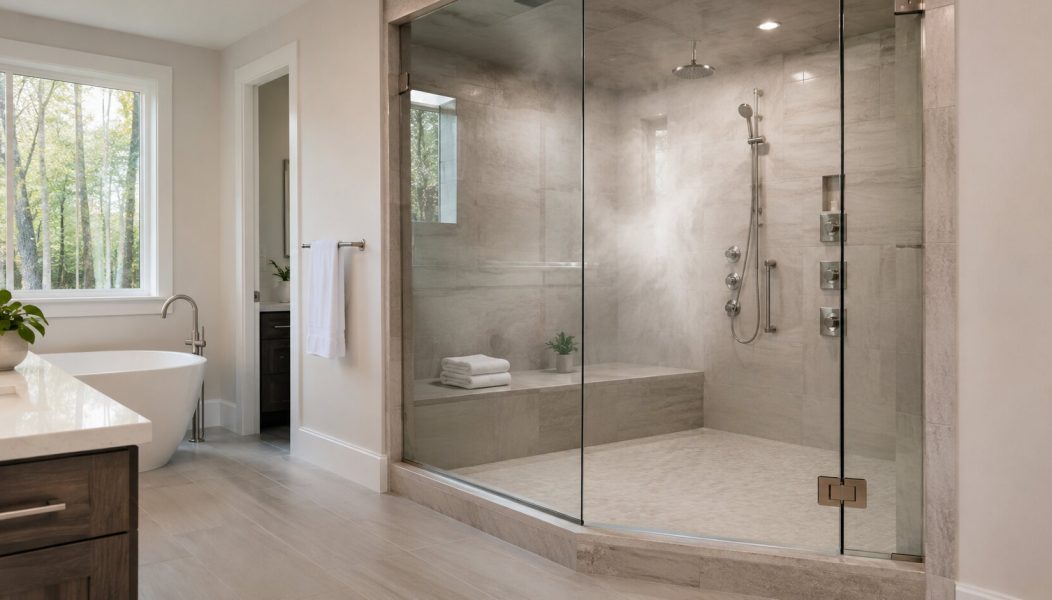
A steam shower is usually built into a sealed shower enclosure. A steam generator heats water and sends steam into the shower through a steamhead. The space must be designed to handle moisture, condensation, drainage, ventilation, and waterproofing.
A sauna is usually a dedicated heated room or wellness space. Instead of filling the room with steam, a sauna heater warms the air and surrounding surfaces. Saunas are commonly built with wood benches and materials designed for dry-heat use.
Both options can feel relaxing and luxurious, but they require different planning. A steam shower is more naturally tied to a bathroom remodel. A sauna usually needs a separate room, sauna package, or dedicated wellness area.
Is Steam Better Than Sauna?
Steam may be better than sauna if you want a moist-heat experience built into a bathroom or shower remodel. A steam shower can add a spa-like feature without requiring a completely separate sauna room.
Steam is often appealing for primary bathrooms because it works within the shower environment. If you are already planning a larger shower, enclosed wet room, built-in bench, or upgraded shower system, steam may be a natural addition to the design.
A steam shower also creates opportunities to coordinate the entire shower experience. The generator, steamhead, digital control, showerhead, handshower, body sprays, seating, lighting, tile, enclosure, and fixture finishes all need to work together.
Steam may not be the right choice for every space. It requires a properly planned enclosure, moisture-resistant materials, professional installation, ventilation considerations, and the right steam generator for the room size.
Is a Sauna Better Than Steam?
A sauna may be better than steam if you prefer dry heat, higher temperatures, and a dedicated wellness space outside the shower. Saunas are often a better match for homeowners who want a separate retreat in a basement, home gym, spa area, or dedicated wellness room.
Unlike a steam shower, a sauna does not rely on high humidity. The experience is drier, warmer, and usually more separate from the bathroom environment. That can be appealing for homeowners who do not want to add more moisture to a bathroom or who prefer the feel of dry heat.
A sauna can also create a distinct design moment. Wood benches, paneling, heater placement, lighting, glass doors, and controls all contribute to the finished space.
Saunas still require careful product planning. Heater sizing, electrical requirements, clearances, ventilation, room materials, benches, and controls all need to be reviewed before selections are finalized.
Steam Shower Pros and Considerations
Steam showers are often selected for bathroom remodels where homeowners want a more spa-like shower experience. They can be especially appealing in primary bathrooms, luxury bath suites, and wet-room designs.
Steam Shower Pros
- Integrates naturally into many bathroom remodels
- Creates a moist-heat, spa-like shower experience
- Uses shower space instead of requiring a separate sauna room
- Can pair with upgraded shower systems, seating, controls, lighting, and finishes
- Strong fit for primary bathroom remodels and luxury shower upgrades
- Allows product coordination across steamheads, controls, shower fixtures, tile, and enclosure details
Steam Shower Considerations
- Requires a sealed shower enclosure
- Needs a properly sized steam generator
- Requires steamhead and control placement
- Waterproofing, ventilation, ceiling slope, and material selection matter
- Electrical and plumbing coordination are usually required
- Generator access and serviceability should be planned before installation
- Professional planning and installation are important
A steam shower is not just a regular shower with steam added at the end. It should be planned as a system, with the generator, enclosure, controls, fixtures, and finishes selected together.
Sauna Pros and Considerations
Saunas are often selected for homeowners who want a dedicated dry-heat wellness space. They can work well in homes with room for a separate sauna area, such as a basement, home gym, pool-adjacent space, or larger primary suite.
Sauna Pros
- Provides a dry-heat experience
- Creates a dedicated wellness-space feel
- Often easier to separate from the bathroom environment
- Natural wood materials can create a warm, calming design
- Can work well in basements, home gyms, and spa-inspired spaces
- May require less moisture management than a steam shower
Sauna Considerations
- Usually requires a dedicated room or sauna package
- Needs a sauna heater sized to the space
- Electrical requirements and clearances matter
- Bench layout, ventilation, controls, and room materials need planning
- Less directly tied to a standard shower remodel than steam
- Installation requirements should be coordinated with a qualified contractor or electrician
A sauna can be an excellent wellness upgrade, but it usually requires more dedicated space than a steam shower. That makes early planning especially important.
Steam vs. Sauna: Heat, Humidity, and Comfort
Steam and sauna experiences feel very different. Steam uses humid heat that fills the enclosure with moisture. A sauna uses dry heat that warms the air, room materials, and seating area.
Steam may feel softer and more enveloping because the air is humid. Some homeowners prefer this because it creates a wet-room spa feeling that pairs naturally with a shower.
Sauna heat is drier and usually hotter. Some homeowners prefer this because the air feels less heavy and the experience is more separate from bathing or showering.
Personal comfort matters. Someone who dislikes high humidity may prefer a sauna. Someone who dislikes very dry heat may prefer steam. If the feature will be used regularly, the better choice is the one that fits the homeowner’s comfort preferences, available space, and remodel plans.
Steam vs. Sauna: Installation and Space Requirements
Steam vs. sauna installation should be compared early because steam usually requires a sealed shower environment, while a sauna usually requires a dedicated dry-heat room or sauna package.
A steam shower is usually planned as part of a bathroom or shower remodel. The shower enclosure needs to be designed to hold steam, manage condensation, and protect surrounding materials. The steam generator must be sized correctly and installed in an appropriate location with access for service.
Steam shower planning may include:
- Steam generator sizing and placement
- Steamhead location
- Digital control location
- Shower enclosure sealing
- Ceiling slope considerations
- Waterproofing and moisture-resistant materials
- Ventilation and humidity management
- Shower seating
- Drainage
- Shower fixture coordination
- Electrical and plumbing requirements
- Access for future service or maintenance
A sauna is usually planned as a dedicated dry-heat space. It may be built as a separate room or selected as part of a sauna package. The sauna heater must be sized for the room, and the space needs appropriate materials, ventilation, clearances, and electrical planning.
Sauna planning may include:
- Sauna heater sizing
- Room dimensions
- Bench layout
- Wood paneling and materials
- Ventilation
- Heater clearances
- Control placement
- Lighting
- Door and glass configuration
- Electrical requirements
- Coordination with a contractor, builder, or electrician
The practical difference is simple: steam usually belongs inside the bathroom or shower plan, while a sauna usually needs its own dedicated space.
Steam vs. Sauna: Cost and Planning Factors
Steam and sauna costs vary widely because the final investment depends on equipment, room size, controls, finishes, electrical requirements, installation complexity, and whether the project is part of a larger remodel.
A steam shower may require several coordinated products and construction details. The steam generator, control package, steamhead, shower enclosure, waterproofing, tile, ventilation, shower seating, and fixture selections can all affect the final cost. Generator access and service planning should also be considered before installation begins.
Steam shower cost factors may include:
- Steam generator size
- Steamhead and control package
- Steam shower package or steam-only package
- Shower enclosure upgrades
- Waterproofing and moisture-resistant materials
- Tile and finish selections
- Shower seating
- Ventilation and humidity management
- Shower fixture upgrades
- Generator access and service planning
- Electrical and plumbing requirements
A sauna has different cost drivers. The sauna heater, room or package size, benches, wood materials, controls, lighting, ventilation, door or glass configuration, and electrical requirements can all affect the final investment.
Sauna cost factors may include:
- Sauna heater size
- Room or package size
- Benches and wood materials
- Controls or timer
- Lighting
- Electrical requirements
- Ventilation
- Heater clearances
- Door or glass configuration
- Contractor or electrician coordination
Because both systems involve technical product planning, it is helpful to review options early with your designer, builder, plumber, contractor, or electrician.
Steam vs. Sauna: Maintenance and Cleaning
Steam showers and saunas both need maintenance, but the work is different.
Steam showers require more moisture management because they operate in a humid environment. The shower enclosure, tile, grout, glass, drain, bench, steamhead, and controls all need to be kept clean. Proper ventilation helps manage humidity after use. Depending on the system, the steam generator may also require flushing, descaling, or other manufacturer-recommended maintenance.
Steam shower maintenance may include:
- Regular shower cleaning
- Glass and tile care
- Grout and sealant monitoring
- Steamhead cleaning
- Control care
- Ventilation use after steam sessions
- Generator maintenance based on manufacturer guidance
Saunas use dry heat, so they typically involve less moisture management. However, benches, floors, heater areas, controls, and ventilation still need attention. Wood surfaces should be cared for properly, and the heater area should be kept clear.
Sauna maintenance may include:
- Wiping benches and seating areas
- Keeping the floor clean
- Maintaining wood surfaces
- Keeping heater areas clear
- Checking controls
- Keeping ventilation openings unobstructed
- Following heater maintenance instructions
Neither option should be treated as maintenance-free. Steam requires more moisture awareness, while sauna maintenance is more focused on keeping the dry-heat space clean and safe.
Steam Shower Systems: What Products Do You Need?
A steam shower usually requires more than a steam generator. The full system should be planned around the shower size, enclosure, controls, fixture layout, and how the room will be used.
Common steam shower components include:
- Steam generator: Produces steam for the shower enclosure and must be sized to the space.
- Steamhead: Releases steam into the shower and should be placed carefully for comfort and safety.
- Digital control: Lets the user operate the steam system and may include temperature, timing, and feature settings.
- Control package: Some systems include controls, steamheads, and other components packaged together.
- Steam shower package or steam-only package: Some systems are selected as packages that combine major components such as the generator, control, and steamhead.
- AutoFlush or drain system: Some systems may include or support automatic flushing or drain-related features.
- Aromatherapy options: Some steam systems support aroma reservoirs or related features.
- Chromatherapy or lighting options: Some packages include lighting or wellness-focused upgrades.
- Shower fixtures: Showerheads, handshowers, body sprays, valves, and trim should be coordinated with the steam system.
- Shower seating: Built-in or added seating should be planned for comfort and layout.
- Enclosure and waterproofing details: The shower must be designed to manage steam, moisture, and condensation.
Banner Plumbing offers steam shower products and options from brands such as Mr. Steam, ThermaSol, and Amerec. At our showroom, our team can help homeowners and trade professionals compare steam shower components, controls, finishes, and related shower fixture selections before final decisions are made.
Sauna Systems: What Products Do You Need?
A sauna usually requires a dedicated dry-heat system built around the size and layout of the room. While sauna planning is different from steam shower planning, the same principle applies: the system should be selected as a complete project, not as one isolated product.
Common sauna components include:
- Sauna heater: Heats the sauna and must be sized to the room.
- Controls or timer: Allows users to manage heat settings and operation.
- Room or sauna package: Some sauna projects use preconfigured or panel-built room packages.
- Benches: Seating layout affects comfort, capacity, and room design.
- Wood panels and room materials: Materials should be appropriate for sauna use.
- Ventilation: Helps the sauna perform properly and remain comfortable.
- Clearances: Heater placement and room layout must follow product requirements.
- Lighting: Lighting should be selected for the sauna environment.
- Electrical planning: Sauna heaters typically require electrical coordination.
We carry sauna-related offerings, including sauna heaters, controls, and sauna package-related products. For sauna projects, Banner can help customers review available product options and coordinate next steps with their contractor, builder, designer, plumber, or electrician.
Which is Better for a Bathroom Remodel, Steam or Sauna?
A steam shower is usually better for a bathroom remodel because it can be built into the shower environment, while a sauna usually makes more sense when the project includes a dedicated wellness space.
For many bathroom remodels, steam is easier to connect to the overall shower plan. The homeowner may already be selecting shower valves, heads, handshowers, tile, glass, drains, benches, and fixture finishes. Adding steam introduces more planning requirements, but it still fits within the bathroom selection process.
A sauna is usually a larger space-planning decision. It can be an excellent upgrade, but it generally needs a dedicated area and product planning around the heater, benches, materials, clearances, and electrical requirements.
The best choice depends on whether the remodel is centered on the bathroom or on a separate wellness area. If the goal is to make the shower feel more spa-like, steam may be the better direction. If the goal is to create a dedicated heat therapy room, a sauna may be the better direction.
What Should You Compare Before Choosing Steam or Sauna?
When comparing steam vs. sauna options, the decision should go beyond heat preference. Both systems affect space planning, product selection, installation coordination, maintenance, and the final feel of the home.
Before choosing steam or sauna, compare:
- Heat preference: Do you prefer moist heat or dry heat?
- Available space: Is there room for a dedicated sauna, or does the feature need to fit into a bathroom?
- Remodel type: Is this a shower remodel, primary bathroom remodel, basement project, home gym, or wellness-space addition?
- Core equipment: Will the project require a steam generator or a sauna heater?
- Sizing: Is the generator or heater sized correctly for the space?
- Controls: Where will controls be placed, and how will they be used?
- Fixture coordination: Will shower fixtures, trims, finishes, and controls feel cohesive?
- Moisture planning: Does the space need waterproofing, sealing, or ventilation for steam?
- Room materials: Are the materials appropriate for a steam shower or sauna?
- Electrical requirements: What power requirements need to be coordinated?
- Plumbing considerations: Does the steam shower require plumbing or drainage planning?
- Maintenance: Which option fits your expectations for cleaning and upkeep?
- Project team: What needs to be coordinated with a contractor, builder, plumber, designer, or electrician?
Seeing products and finishes together can make the decision more practical. Banner’s showroom team can help customers compare steam shower components, sauna-related product options, and fixture details so the final selections support the overall remodel.
Where Can You Compare Steam Shower Systems and Sauna Product Options?
If you are deciding between steam and sauna options, visiting a showroom can help you move from general research to practical product planning. Steam and sauna systems involve equipment, controls, finishes, installation requirements, and compatibility details that are easier to understand when you can compare options in person.
At Banner Plumbing’s Buffalo Grove kitchen and bath showroom, you can review steam shower products, shower fixtures, controls, finishes, and related sauna product options with help from an experienced team. This is especially useful if steam or sauna is part of a larger bathroom, shower, or wellness-space remodel.
If you are new to the selection process, learning what to expect at a kitchen and bath showroom can help you prepare for your visit.
Visiting the showroom is especially useful if you are:
- Planning a primary bathroom remodel
- Considering a steam shower
- Comparing steam generators, steamheads, and controls
- Coordinating shower fixtures and finishes
- Reviewing sauna heater or sauna package options
- Working with a designer, builder, plumber, contractor, or electrician
- Trying to understand which products need to be selected before installation
- Deciding whether steam or sauna makes more sense for your space
If you are comparing steam vs. sauna options for an upcoming remodel, visit Banner Plumbing’s Buffalo Grove kitchen and bath showroom to review product options and coordinate selections. You can also get directions to the showroom or contact Banner Plumbing with questions before your visit.
Steam vs. Sauna FAQs
- What is the difference between steam and sauna?
Steam uses moist heat with high humidity, while a sauna uses dry heat at higher temperatures. Steam is usually built into a sealed shower or steam room, while a sauna usually requires a dedicated dry-heat space.
- What is the difference between a steam shower and a sauna?
A steam shower uses a steam generator to send moist heat into a sealed shower enclosure. A sauna uses a heater to warm a dedicated dry-heat room. Steam showers are often integrated into bathroom remodels, while saunas usually need a separate wellness space.
- Is steam better than sauna?
Steam may be better if you prefer moist heat and want a spa-like feature built into a bathroom or shower remodel. Sauna may be better if you prefer dry heat and have space for a dedicated wellness room.
- Is sauna better than steam?
A sauna may be better if you want dry heat, higher temperatures, and a dedicated room separate from the shower. Steam may be better if you want a moist-heat experience that works within a bathroom remodel.
- Is a steam shower or home sauna better?
A steam shower is usually better if you want a spa-like feature built into a bathroom or shower remodel. A home sauna is usually better if you prefer dry heat and have space for a dedicated wellness room, basement sauna, home gym, or spa area.
- Which is better, steam room or sauna?
Neither is better for every home. A steam room or steam shower is often better for bathroom integration, while a sauna is often better for a dedicated dry-heat wellness space.
- Is a steam shower the same as a steam room?
A steam shower and steam room both use moist heat, but they are not always the same. A steam shower is usually a shower enclosure designed for steam use, while a steam room may be a larger dedicated space built specifically for steam.
- Is a steam shower the same as a sauna?
No. A steam shower uses moist heat and high humidity in a sealed shower environment. A sauna uses dry heat in a dedicated heated room.
- What products do you need for a steam shower?
A steam shower usually needs a steam generator, steamhead, digital control, sealed enclosure, proper waterproofing, ventilation planning, and compatible shower fixtures.
- What products do you need for a sauna?
A sauna usually needs a sauna heater, controls or timer, benches, proper room materials, ventilation, clearances, and electrical planning.
- Does a steam shower need a generator?
Yes. A steam shower needs a steam generator to heat water and produce steam for the shower enclosure. The generator must be sized to the shower and installed in a suitable location with access for service.
- Can you add steam to an existing shower?
Sometimes, but the shower must be suitable for steam. It generally needs a sealed enclosure, proper waterproofing, suitable materials, steam generator planning, control placement, and ventilation considerations.
- Do steam showers need ventilation?
Yes. Steam showers need proper moisture management and ventilation planning to help control humidity and protect the surrounding bathroom environment.
- Which is easier to maintain, steam or sauna?
Saunas are often simpler to keep dry because they use dry heat, while steam showers require more moisture management, shower cleaning, ventilation, and possible generator maintenance.
- Which is easier to install, steam shower or sauna?
The easier option depends on the home and project. A steam shower may be easier to integrate into a bathroom remodel, while a sauna may be easier when there is already space for a dedicated dry-heat room. Both require professional planning.
- Which is better for a bathroom remodel, steam or sauna?
A steam shower is usually the better fit for a bathroom remodel because it can integrate with the shower area. A sauna may be better when the remodel includes a dedicated wellness room or separate spa area.
- Is a steam shower or sauna more expensive?
A steam shower or sauna can be more expensive depending on the equipment, space, installation requirements, and finish selections. Steam shower costs are often affected by generator sizing, waterproofing, enclosure planning, controls, and shower fixtures. Sauna costs are often affected by heater sizing, room materials, benches, controls, electrical requirements, and package size.
- Is a steam shower worth it?
A steam shower can be worth it if you want a spa-like feature built into a primary bathroom or luxury shower remodel. It is most worthwhile when the enclosure, generator, controls, fixtures, and ventilation are planned correctly.
- Is a sauna worth it?
A sauna can be worth it if you want a dedicated dry-heat wellness space and have room for the heater, benches, ventilation, controls, and required clearances. It is best planned early with the rest of the project.
- What should you compare before choosing steam or sauna?
Before choosing steam or sauna, compare heat preference, available space, bathroom integration, product components, generator or heater sizing, controls, ventilation, electrical requirements, plumbing needs, and long-term maintenance.
- Should I compare steam and sauna products in a showroom?
Yes. Comparing steam and sauna product options in a showroom can help you understand controls, steamheads, generators, sauna heaters, finishes, shower fixtures, and how each system may fit into your remodel.